01 / BalletLine.
Line.
Control.
Make the detail a teacher sees available in the moment a dancer needs it.
01 / Camera view
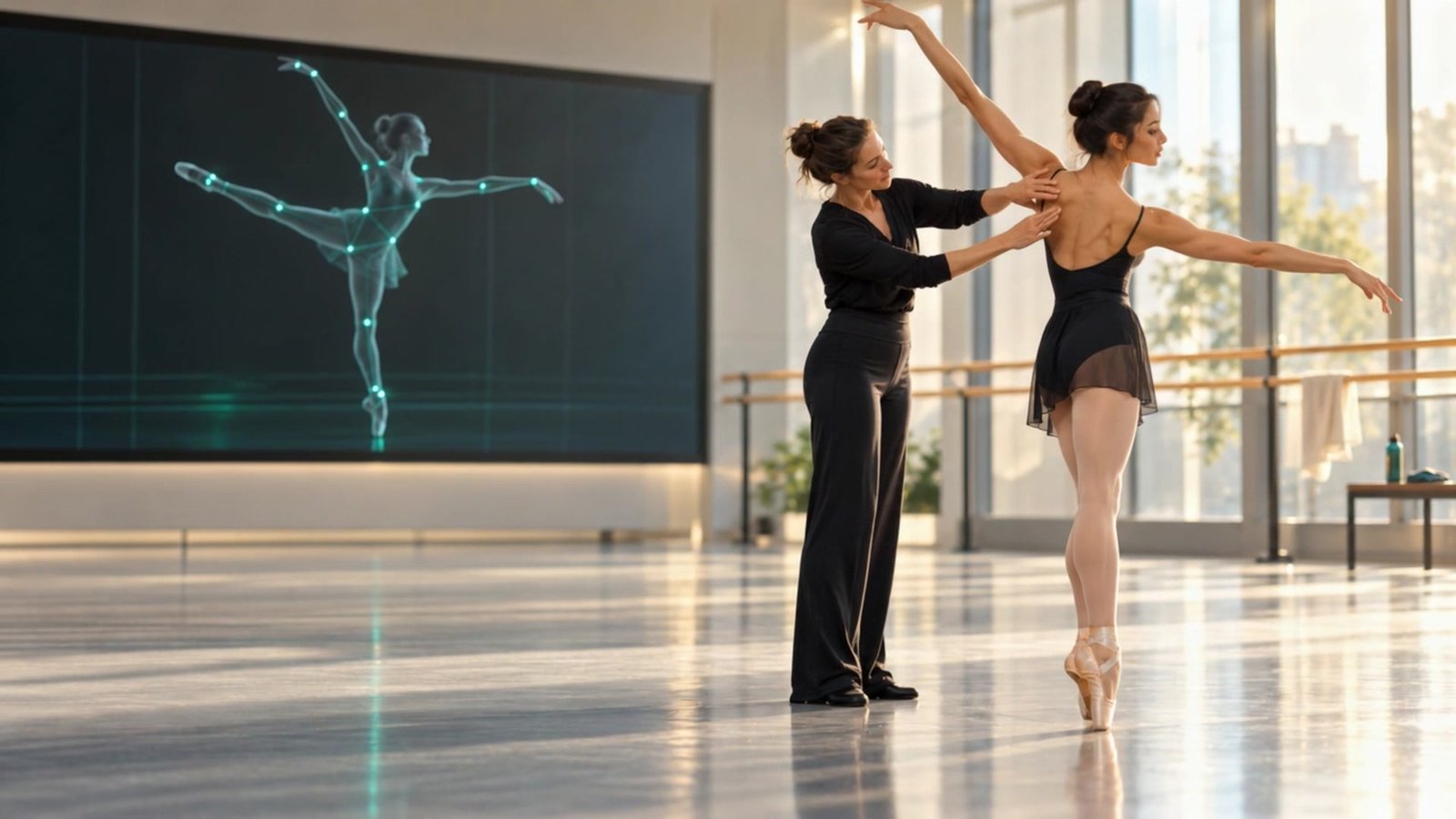
A voice coach that sees how you move and tells you what to fix — in the words a good teacher would use.
02 / Correction engine
Ballet is the hardest test of movement correction. The same engine can support every discipline people teach.
The proposition / 02
Everyone is building AI agents. Sports and dance studios still have none.
Art of Sports is the AI agent for sports and dance studios. One camera, spoken corrections in the words a good teacher would use, and progress measured session by session.
The camera does not teach. The correction does. Art of Sports turns an estimated movement into one practical sentence that helps a student improve now.
The first proof / 03
Ballet is the first application because precision is non-negotiable. The correction engine starts there, then travels to every discipline in which people practise technique.
Make the detail a teacher sees available in the moment a dancer needs it.
Turn a precise training sequence into clear, immediate coaching.
Support posture, rhythm and repeatable form — without interrupting practice.
The problem / 04
For dance, sport and movement schools, feedback is the product. But personal feedback does not scale with the class, the timetable or a second location.
Demonstrating and correcting at the same time is physically impossible. Half the room goes uncorrected. Teachers who can no longer demonstrate take decades of knowledge with them.
↗A class opens when a teacher is found and closes when they leave. The teacher is both the biggest cost and the limit on how many people one room can serve.
↗Between lessons, nobody says whether the movement is right. Practising a mistake makes it stick; what a child learns wrong at seven can take a decade to undo.
↗Art of Sports makes a teacher’s correction available wherever the student practises.
What we build / 05
The teacher stops demonstrating and starts coaching. Art of Sports translates movement into the one correction that is useful in that moment.
B2B / Assistant for the Teacher
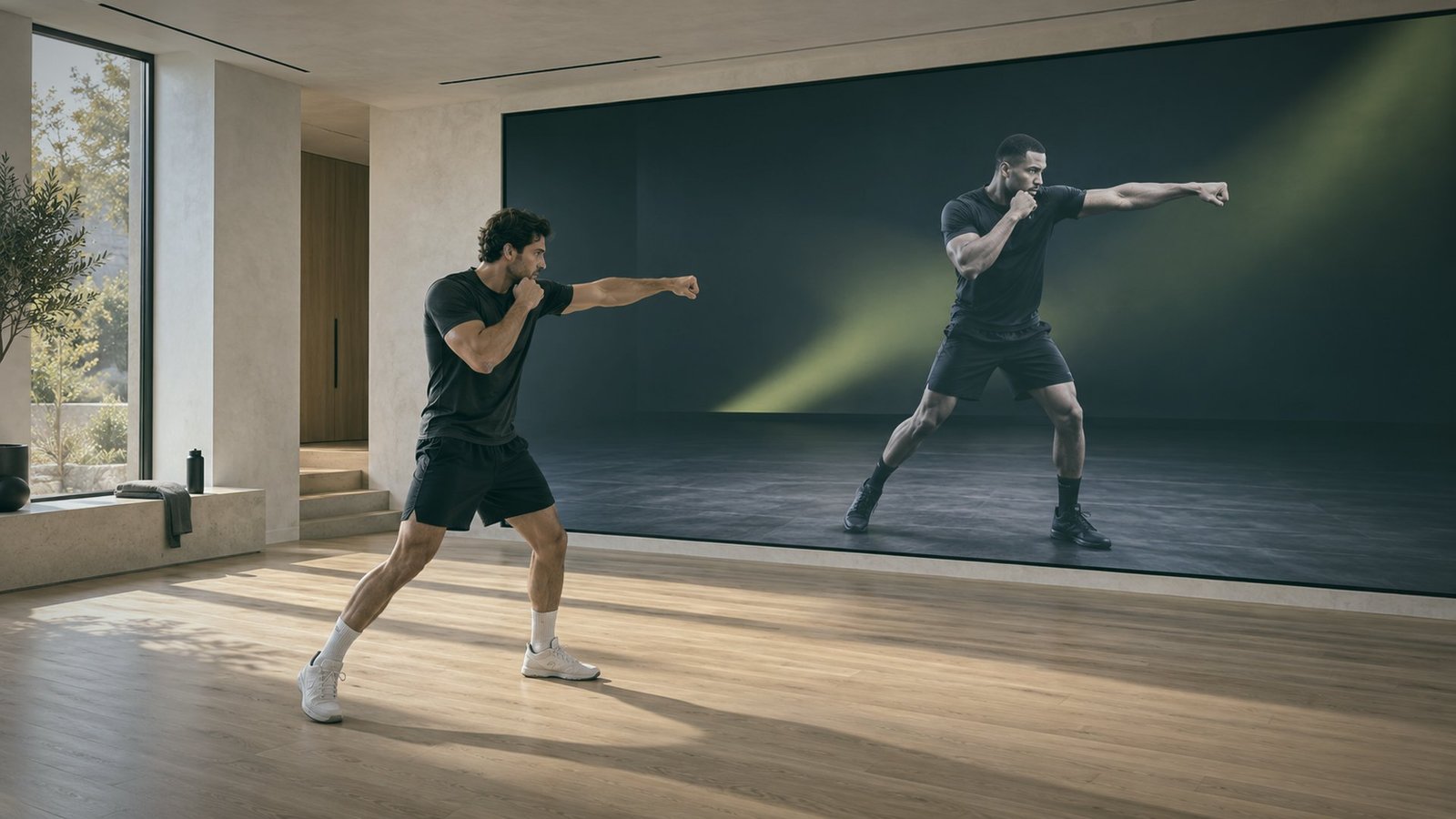
The full class runs on any screen in the studio. The assistant demonstrates and prepares the lesson, so the teacher has time to correct. Teachers who can no longer demonstrate keep teaching; the teacher always stays first in the room.
B2C / Teacher in the Pocket
One phone camera, voice control — “play that again”, “slower” — and spoken corrections. The teacher assigns the lesson and keeps full control. For young children, exercises become a game with characters.
How it is sold · B2B2C
We do not sell an app and hope. The studio licenses the assistant for its classes, and its students get the Teacher in the Pocket through the studio. Every class that already exists becomes a place where the app is handed on, so customers do not have to be bought one by one.
A licence for the Assistant for the Teacher, on any screen in the room.
The assistant demonstrates the class. The teacher has time to correct, and stays first in the room.
Teacher in the Pocket takes the lesson home: one phone camera, the same voice, the same corrections.
Licence fee from the studio, app subscriptions sold through the studio with a share for the studio.
Why one camera is enough
A single camera cannot measure a body to the millimetre, and Art of Sports does not claim it can. The output is a spoken cue — “shoulder down, weight forward” — not a number. That translation absorbs the uncertainty of the estimate.
Pose estimation is freely available. What is not available is the mapping from mistake to correction: which deviation, in which exercise, at which level, has which cause and needs which words. That comes from fifteen years of running schools, and it cannot be bought.
Hinge Health and Kaia showed that camera-based movement correction is a market. They correct against a clinical protocol. Art of Sports corrects against a teaching method, for a learner who is still learning.
See it work / 06
It corrects one ballet exercise today and has been tested with more than ten people. The camera video never leaves the device.
A simple learning loop
About 90 seconds. The voice tells the student where to stand and what to do.
Follow the video and hear one correction at a time, like a teacher in class.
See what went well and what to practise next.
Today / prototype
Scan with a phone, place it around three metres away and keep the whole body in frame. On a laptop or TV, open the studio view and connect it to the phone with the code shown there.
One camera, one exercise, spoken corrections and voice-controlled playback. The next version expands the curriculum, the number of levels and the studio workflow.
Investor preview. Please do not share the prototype link.
Who it is for / 07
The lessons and corrections are recorded and annotated once. After that, they work for anyone in front of a camera.
Qualified teachers are hard to find. The academy trains new ones, and the assistant supplies corrections an experienced teacher would make, so fewer mistakes go unnoticed.
With consent, a champion’s or legendary teacher’s work can be recorded and annotated once, so anyone can learn the technique and the movement is kept for the next generation.
Camera-led practice at home, avatars and games allow families to practise together. Exercises are adapted with therapists; the goal is movement participation, not diagnosis.
The system leads the class, a trained helper keeps it safe, and progress can be logged for a doctor or physiotherapist. Art of Sports records; it does not diagnose.
Exercises become a cartoon with characters. Children play and pick up technique without noticing that they are learning.
One phone, a lesson assigned by their teacher, and a voice that says what to fix.
One library, many rooms
The recordings, the annotations and the corrections are the asset. Every new kind of room is another place to use the same lessons.
Phone
One camera at home is enough for spoken corrections.
Studio
Several cameras and an LED screen enable finer corrections and put the full class on the wall.
Hotels
Guests choose yoga, stretching or ballet on a large screen and train without a trainer on site.
Container studios
An immersive LED room: book, scan a QR code, train and go home. No equipment for ballet, stretching or children’s dance; a few reformers for Pilates.
How it grows / 08
Investors invest in Art of Sports only. Two independent partners bring the studios and the rooms.
Business in a box for dance and movement schools: CRM, booking, payments and billing, with AI agents on top. It also runs the teacher academy.
One agent handles SEO, one answers customers from the school’s own FAQ and one plans social media. Every teacher has an assistant for questions such as “has this family paid?” or “what did we last tell them?”
Its schools are a direct route to studios that want the coach.
Methodology, correction engine and voice AI. Studios license it; their students take the app home.
Spaces from landlords and venues that want classes in them. More rooms mean more places to run the method.
Soomo and the room network are separate companies and are not part of this round.
Why it is one system
It runs out of teachers, students or space — or administration consumes the teacher’s evenings. Oksana ran every part of that business herself for fifteen years across twelve schools. Each part of the ecosystem answers one of those problems.
Teachers
Part of Soomo: trains teachers in the method under licence from Art of Sports. Every graduate can open a class with the coach.
Operations
Booking, payments, CRM and AI agents, so teachers spend time teaching instead of on administration.
Space
Rooms by the hour, so a new teacher can start without signing a lease.
Quality
The method and the coach, delivered consistently in every room.
Why this matters for investors. Art of Sports does not have to build or fund the other parts. Partners bring teachers, studios and rooms, and all run the method under licence. As the ecosystem grows, more studios license the core.
How it reaches studios
Art of Sports does not sell an app and hope. The system goes out through a licensed studio network, starting in Germany, where Oksana built her schools.
Art of Sports keeps all IP and grants one master licence per market. A local licensing company signs studios, trains them and checks quality.
Ballet first, then other disciplines. Each studio belongs to its founder, who runs and finances it. Existing schools can join under their own name.
Teachers from the academy, operations from Soomo, rooms from the network, and the method and coach from Art of Sports.
A licence fee on studio revenue, with no entry fee. Payments run through Soomo, so revenue is known rather than reported.
| Line | What the studio gets | Fee |
|---|---|---|
| Tool licence | Software, curriculum and corrections under the studio’s own brand | 5–6% + 1–2% marketing |
| Brand licence | Brand, teacher training and territory protection | 8% + 2% marketing |
| Student app | Teacher in the Pocket, sold through the studio, with a revenue share for the studio | €9.90–14.90 per month |
Rates are indicative and set per market. 8 + 2 is the market point: Club Pilates charges 8 + 2; Orangetheory 8 + 3. Software licence only. Screens and installation run through partners and are never part of the fee.
Where we honestly are / 09
Built from fifteen years of operating schools, not an abstract AI thesis. The starting point is a working prototype; the round turns the method into a product and a growing correction library.
Exercise corrected by voice today, through one phone camera.
People have used the prototype so far.
Ballet school testing the prototype this autumn.
Team / 10
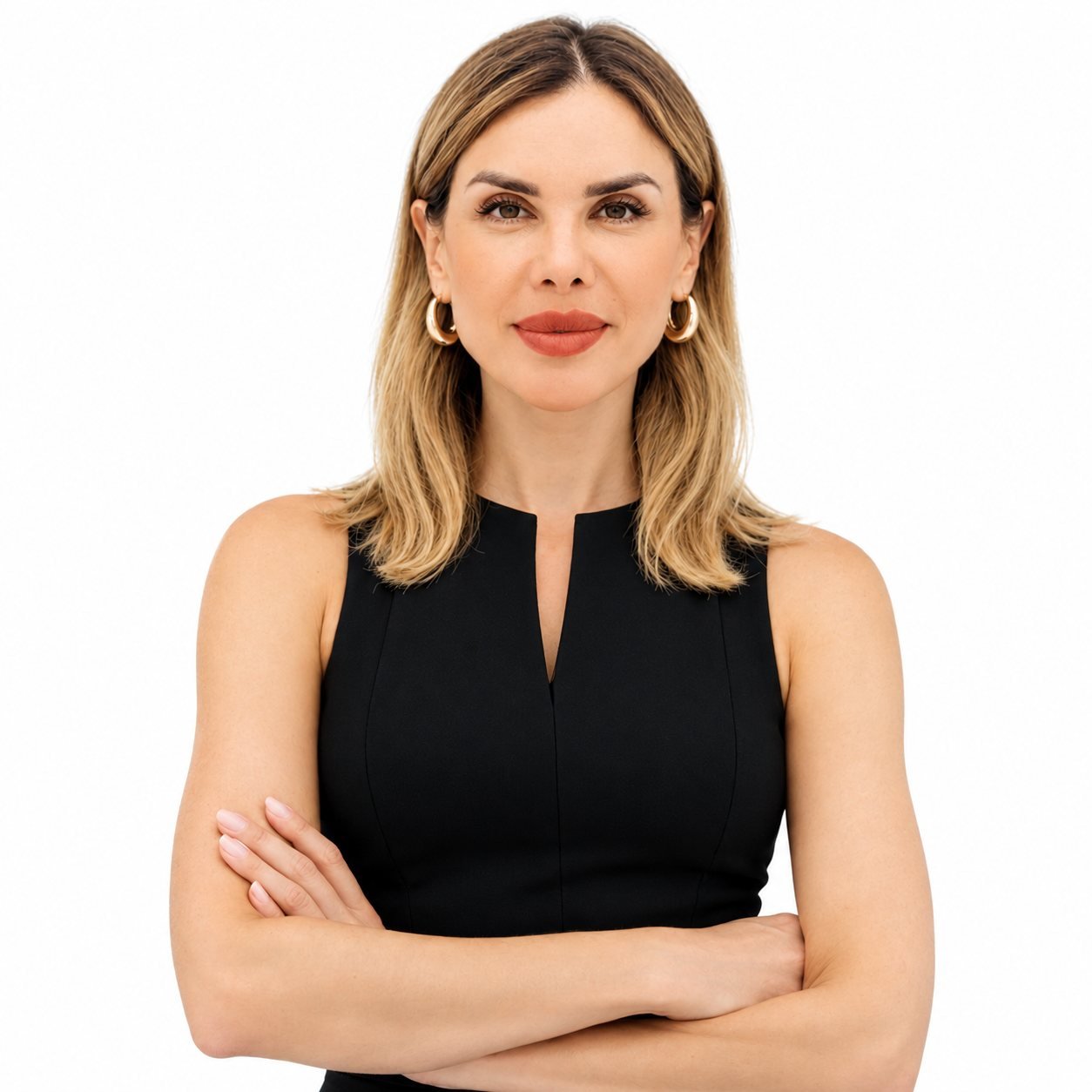
Founder & CEO
Thirty years in ballet and sport, fifteen of them on the operator’s side of the table. From 2011 she built twelve ballet and movement studios in Germany without a bank loan or outside capital. In 2021 she created BalletSports: classical ballet combined with sport, barre and stretching.
Her method travels without her: a teacher worked with her system for four years, teachers she trained now run their own schools, and students from her academy were accepted at the John Cranko School in Stuttgart and the State Ballet School in Berlin. She staged her own productions in theatres of up to 750 seats.
Founder reach, not company traction: her own BalletSports channel reached more than 2.3 million organic views with one post, and twelve studio operators got in touch within 48 hours. This is the audience Art of Sports can launch into.
She built the first prototype herself, without a technical background. Qualifications include a university diploma in stage dance from HfMDK Frankfurt — including anatomy, Feldenkrais and music theory — and a teacher diploma from the Vaganova Ballet Academy in St Petersburg.
The round / 11
First cheques from €25k. Today the method scales through people the founder trained herself; this round pays for the layer that lets it travel beyond one founder and one room.
CTO full time with the engineering team. The first curriculum block filmed and annotated with professional dancers. Testing at the partner school. IP and company structure in order.
Milestone: the correction runs on a phone with a real learner.
More exercises, levels and disciplines annotated; the studio version with several cameras; the first licensed studios outside the existing network.
The money goes into research and annotation, not hardware. Detailed use of funds, financial plan and cap table follow in the data room.